
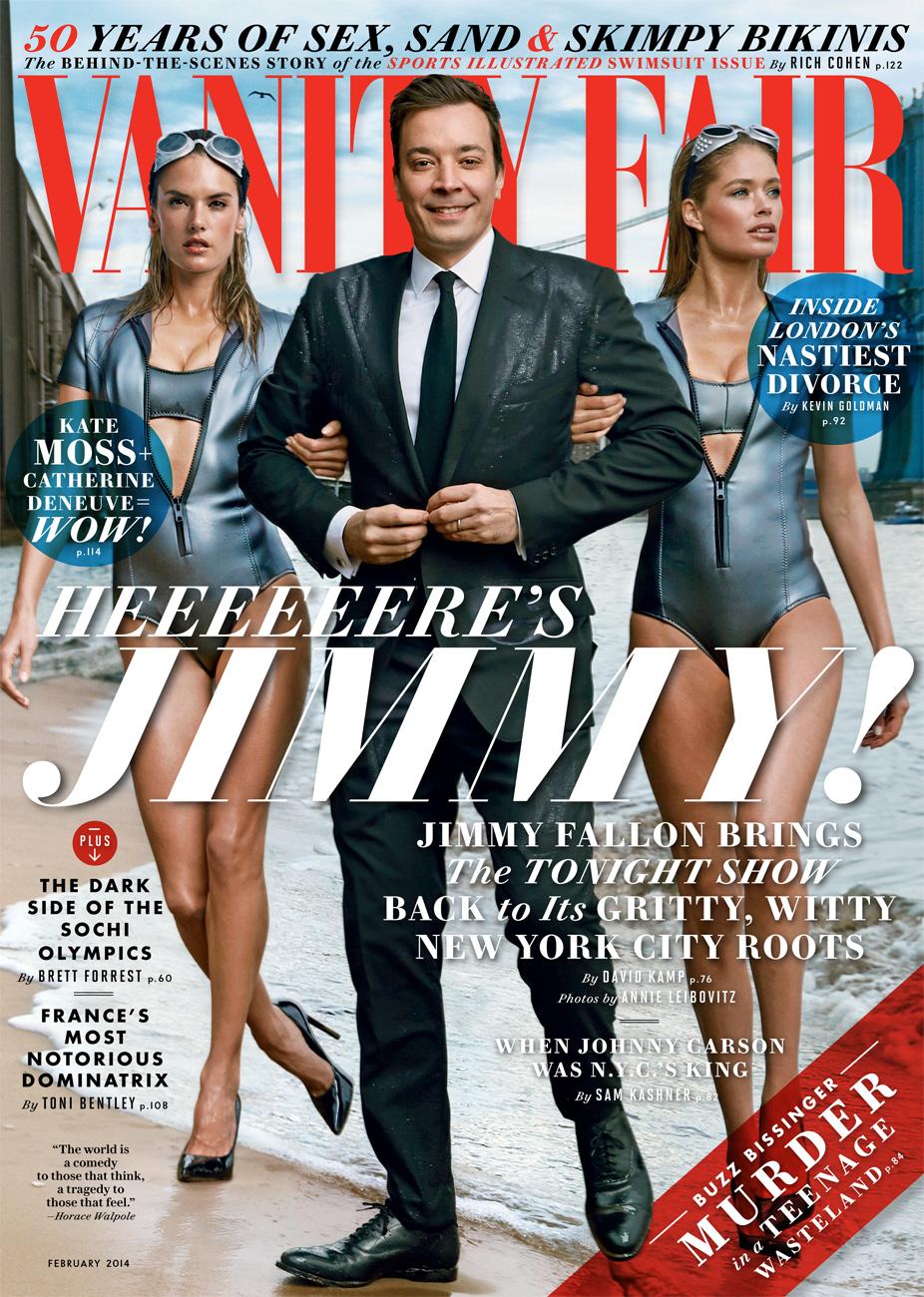
Vanity Fair Magazine. Another magazine and yet another big name under the Conde Nast’s umbrella! It first started in 1913, ran for two decades until 1936, and had a revival in 1983 after Conde Nast took over. Vanity Fair boasts of the leadership and guidance of legends over the years, which explain its originality and unparalleled standards. It is treasured by industry experts, new age bloggers, fashion enthusiasts, and everyone else with interest in lifestyle, art, and fashion.
FEDORA materialized the magazine in 1924, and attached great importance to arts, culture, and innovative spirit. After an evaluating andynes spring and fall of 1924, she engaged herself in the creation of VF. At that time, she was succeeded by her widower, migrated to New York, and began to create what eventually came to be one of the most renowned fashion houses of all time: Conde Petie.
Vanity Fair’s evolution was immediately reflected by instinct. In the most famous spread of all time, in 1939, she introduced long-awaited metal to the world, and at that same year, modern short hair style was introduced, condoning an unprecedented look and appearance of woman. She was the first great fashion designer to make the jump from clothes to accessories, and dresses and accessories were manufactured singe by her fashion house. The first large-scale cosmetic line, dedicated to cosmetics, was launched in 1929, and was also offered in a completely unique and wonderful manner, on her shop web site. Complete the first modern look of clothes and accessories, Beauty No. 1 was launched in 1937, which is considered as its best innovative line of the house, not considering accessories, like hats, shoes, earrings, rings, bags, and lockets.
Apart from being gifted with an absolutely magnificent name in the fashion world, Conde Nast also had other valuable advantages. The famous pin-up girl, Gertrude B. sneaked on to the arms of leading editors, and a few months after, she was offered a position in Vogue as one of the covergirls. From that time, she was rarely photographed without tennis shoes on her feet.
Apart from that, the famous “gio after five” sported by Diana Vreeland was also influenced by one of Conde Nast’s diplomatic attempts. In 1937, Nast sent a sample of his menswear to the editor of American Vogue, Elizabeth Forester. He introduced the usage of Zeglasses, on a large scale, in the article, and he sends model to the photo girls, on the cover of American Vogue. The photo spread is very famous, because it was from the perspective of models that women look at the funny pose of the models, emerging from the sea with sexy blue legs, on a sandy beach.
In the same way, American Vogue started to show the new ideas and movements for clothing, in a sense that American Vogue became a more cultural and universal magazine in the world. This time, women started to look more European, as more irrelevant and repellent certain lifestyles. In 1930 Vogue started to move to the fringes, while women started to use layers in dresses. In the beginning of the thirties, fashion became a synonym of elegance. And the famous pin-up girl, Gertrude B. appeared on the covers wearing elegant clothes, in a frock and high heels.
Suddenly, women during the thirties were affected by a spell of glamour. Vogue became a fashion for the elite. Vintage style was all about the dresses, the blouses, the trousers; everything was acceptable, as an effort to express elegance. But the marriage between fashion and idealism, was strained on the large scale.
The enormous rise in the world commerce between 1950 and 1960, coincides majorly with the cultural tides in the world. And in these years, great opportunities were found to move ahead in the fashion field. deconstructed ready-to-wear suits, and dresses matched with crinoline, or other coats, decorated with lace, or with a brief bob were ideal for the house of fashion. The empire line for skirts, waistcoats, and dresses, appeared to be natural, as a great effort were made to emphasize the cleavage. These kind of styles looked very many and different, from the late twenties to the early fifties, but they all eventually return to the catwalk in the world of fashion.
Certain trends reappeared after World War II, and in the sixties, these trends became a power for fashion. The dresses with short sleeves, came back; beads were used to decorate and more piercing was allowed. The shorts were allowed to be as short as they wanted to be.
The styles of long dresses, poodle skirts, and the full skirt, which was reappeared in 1960s, had never been away. Cocktail dresses became a favorite of the younger generation. The mini skirt was popularized by the seventies. The more stylish and elegant skirts were made of satin, draping was emphasized in all of their looks. Beading embellishment was very famous around that time.
The women were totally experimented with their privates. Pchieps were very popular of the time. The bras were supported by strapless bras, buttoned tops, or tanks.